
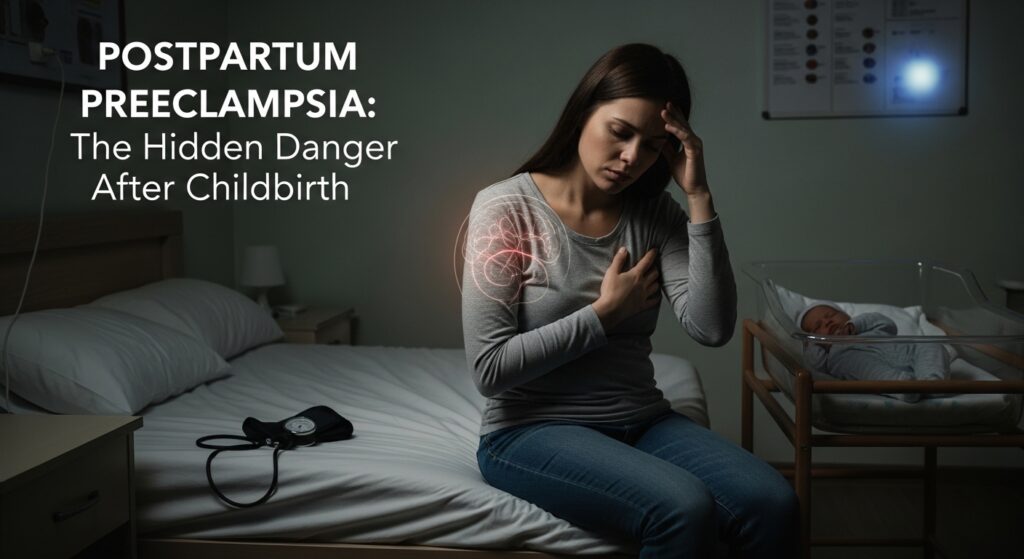
Bringing a baby into the world is often seen as the end of pregnancy-related risks. However, Postpartum Preeclampsia proves that serious health complications can still arise after delivery. This condition, though less talked about, can be life-threatening if not recognized and treated early.
In this comprehensive guide, we’ll explore everything you need to know—from symptoms and causes to prevention and treatment—so you can stay informed and safe during the postpartum period.
Understanding Postpartum Preeclampsia
What Is Postpartum Preeclampsia?
Postpartum preeclampsia is a rare but serious condition that occurs after childbirth, usually within 48 hours but sometimes up to six weeks later. It is marked by high blood pressure and signs of organ damage, most commonly affecting the liver and kidneys.
Unlike preeclampsia during pregnancy, this condition appears after delivery—even if the mother had normal blood pressure before and during pregnancy.
How It Differs from Prenatal Preeclampsia
While both conditions share similar symptoms, postpartum preeclampsia can be more dangerous because it often goes unnoticed. Many new mothers assume their symptoms are part of normal recovery, which delays diagnosis and treatment.
Causes and Risk Factors
Common Causes
Hormonal Changes After Delivery
After childbirth, the body undergoes rapid hormonal shifts. These changes can affect blood vessels and lead to increased blood pressure.
Blood Vessel Abnormalities
Some women may have underlying vascular issues that become more pronounced after delivery, contributing to the condition.
Who Is at Higher Risk?
Age and Medical History
Women over 35 or those with a history of high blood pressure, diabetes, or preeclampsia are at higher risk.
Multiple Births and Obesity
Carrying twins or triplets, as well as having obesity, can significantly increase the likelihood of developing postpartum preeclampsia.
Warning Signs and Symptoms
Early Symptoms to Watch
High Blood Pressure
One of the first signs is elevated blood pressure, often unnoticed without monitoring.
Severe Headaches
Persistent headaches that don’t go away with medication can be a warning sign.
Advanced Symptoms
Vision Changes
Blurred vision, sensitivity to light, or temporary loss of vision are serious indicators.
Swelling and Shortness of Breath
Sudden swelling in the face and limbs, along with difficulty breathing, requires immediate medical attention.
Diagnosis and Medical Evaluation
Tests and Procedures
Blood Tests
Doctors check for liver function, platelet count, and kidney performance.
Urine Analysis
Protein in the urine is a key indicator of preeclampsia.
Potential Complications
Short-Term Risks
Stroke and Seizures
If untreated, postpartum preeclampsia can lead to seizures (eclampsia) or even stroke.
Long-Term Health Effects
Cardiovascular Issues
Women who experience this condition may face a higher risk of heart disease later in life.
Treatment Options
Medications Used
Blood Pressure Control
Doctors may prescribe antihypertensive medications to lower blood pressure.
Anti-Seizure Drugs
Magnesium sulfate is commonly used to prevent seizures.
Hospital vs Home Care
Severe cases require hospitalization, while mild cases may be managed at home with close monitoring.
Prevention Strategies
Lifestyle Adjustments
Diet and Hydration
Eating a balanced diet and staying hydrated can support recovery and reduce risks.
Monitoring Blood Pressure
Regular blood pressure checks are crucial, especially in the first few weeks postpartum.
When to Seek Emergency Help
Red Flag Symptoms
Seek immediate medical care if you experience:
-
Severe headache
-
Vision problems
-
Chest pain
-
Difficulty breathing
-
Sudden swelling
Living After Recovery
Emotional and Physical Healing
Recovery doesn’t end with treatment. Emotional support and regular health check-ups are essential for long-term well-being.
Postpartum Care Tips for New Mothers
Building a Support System
Having family, friends, or healthcare providers to rely on can make a significant difference in recovery and early detection of complications.
Frequently Asked Questions (FAQ’s)
1. Can postpartum preeclampsia occur without prior symptoms?
Yes, it can develop even if you had a normal pregnancy and no signs of preeclampsia before delivery.
2. How long after childbirth can it develop?
It typically occurs within 48 hours but can develop up to six weeks postpartum.
3. Is postpartum preeclampsia life-threatening?
Yes, if untreated, it can lead to severe complications like stroke or seizures.
4. Can it be prevented?
While not always preventable, regular monitoring and a healthy lifestyle can reduce risk.
5. Does it affect future pregnancies?
Yes, having postpartum preeclampsia increases the risk in future pregnancies.
6. When should I call a doctor?
Immediately if you experience severe symptoms like headaches, vision issues, or breathing problems.
Conclusion
Postpartum Preeclampsia is a condition that demands awareness and vigilance. While it may be rare, its consequences can be severe if ignored. Recognizing the symptoms early, seeking prompt medical care, and maintaining regular postpartum check-ups can make all the difference.