
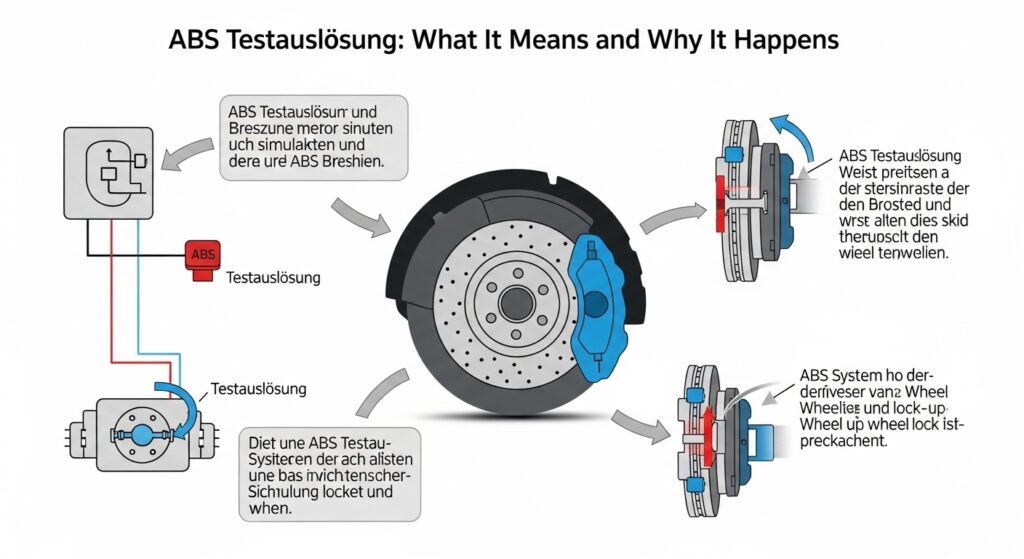
Abs Testauslösung is a term many drivers encounter when researching strange noises or brief brake pedal feedback after starting their car. While it sounds technical and alarming, Abs Testauslösung often refers to the ABS self-test activation that occurs shortly after you begin driving.
Abs Testauslösung is completely normal. However, in other situations, it can indicate a problem with wheel speed sensors, ABS components, or electrical systems. This in-depth guide explains what Abs Testauslösung means, why it happens, when it’s normal, and when you should take action.
What Is Abs Testauslösung?
Abs Testauslösung translates from German to “ABS test triggering” or “ABS test activation.” It typically refers to the automatic self-diagnostic check performed by a vehicle’s Anti-lock Braking System (ABS).
Modern ABS systems run a quick internal test shortly after the vehicle begins moving. During this test:
- The ABS control unit checks wheel speed sensor signals
- Hydraulic valves are briefly activated
- The ABS pump may run momentarily
Drivers may notice a short clicking, buzzing, or subtle vibration in the brake pedal. This is the system confirming it is ready to operate in an emergency.
According to Bosch Mobility, ABS prevents wheel lock-up during braking and helps maintain steering control during hard stops. The self-test ensures that this safety system is functioning properly before it’s needed.
When Is Abs Testauslösung Normal?
In most vehicles, Abs Testauslösung occurs:
- Once per drive cycle
- At low speeds (typically between 10–30 km/h or 5–20 mph)
- Without triggering a warning light
Some manufacturers document that drivers may hear a brief noise during this self-check. Nissan technical bulletins, for example, describe ABS/VDC systems performing a self-check shortly after startup, which can produce a noticeable but harmless sound.
If the following conditions apply, Abs Testauslösung is likely normal:
- It happens only once after starting the vehicle
- There is no ABS warning light
- Braking performance feels normal
In this case, no repair is needed.
When Abs Testauslösung Indicates a Problem
Abs Testauslösung becomes a concern if:
- ABS activates repeatedly at low speed
- The brake pedal pulses during gentle braking on dry roads
- The ABS warning light stays on
- ABS activates when there is no loss of traction
In these cases, the system may be reacting to incorrect wheel speed data or experiencing an internal fault.
According to diagnostic resources such as AA1Car, faulty wheel speed sensors are among the most common ABS issues and frequently trigger warning lights or unintended ABS activation.
Common Causes of Unintended Abs Testauslösung
1. Faulty Wheel Speed Sensor
Wheel speed sensors monitor how fast each wheel rotates. If one sensor sends incorrect or intermittent data, the ABS module may interpret it as wheel lock-up.
Symptoms include:
- ABS activating at low speeds
- ABS warning light
- Inconsistent braking feel
HELLA Techworld provides technical guidance on testing and replacing ABS sensors, emphasizing signal accuracy and proper sensor gap.
2. Damaged Tone Ring (Reluctor Ring)
The tone ring works with the wheel speed sensor to generate a signal. If it cracks, rusts, or loses teeth, the signal becomes irregular.
This can cause ABS to activate even when traction is normal. The system falsely detects wheel lock because of signal interruption.
This issue is especially common in older vehicles or those exposed to road salt and corrosion.
3. Low Battery Voltage
ABS systems are sensitive to voltage fluctuations. A weak battery or poor grounding can cause:
- Random warning lights
- False ABS triggers
- Temporary system faults
Voltage drops are particularly common during cold weather.
4. Wiring or Connector Problems
Damaged wiring near suspension components can cause intermittent sensor signals. Since ABS wiring runs close to moving parts, it is vulnerable to:
- Abrasion
- Moisture intrusion
- Corrosion
Even a minor wiring issue can result in repeated Abs Testauslösung.
5. ABS Control Module or Hydraulic Unit Failure
Less common but more serious is failure within the ABS module or hydraulic pump. These failures often:
- Trigger persistent warning lights
- Store diagnostic trouble codes
- Require professional repair or module replacement
How ABS Improves Safety (Why the Test Matters)
The ABS self-test exists for a reason. The U.S. National Highway Traffic Safety Administration (NHTSA) has reported that ABS reduces certain types of crashes by preventing wheel lock and maintaining steering control.
Because ABS is critical for emergency braking stability, the system verifies functionality at startup. That brief Abs Testauslösung ensures valves and sensors are operational before you need them in a panic stop.
How to Diagnose Abs Testauslösung Properly
Step 1: Observe the Pattern
Ask yourself:
- Does it happen once per trip?
- Does it occur only at a specific speed?
- Does it happen every time you brake gently?
A one-time activation at low speed usually indicates normal self-testing.
Repeated activation suggests a fault.
Step 2: Check the ABS Warning Light
If the ABS light remains on, the system has detected a malfunction.
The ADAC explains that dashboard warning lights indicate system issues that should not be ignored.
Step 3: Scan the ABS Module
A standard OBD-II scanner may not access ABS codes. You need a scanner capable of reading:
- ABS control module
- Live wheel speed data
- Stored and pending fault codes
Common diagnostic codes point directly to specific wheel sensors.
Step 4: Inspect Physical Components
Check for:
- Cracked tone rings
- Corroded sensor connectors
- Damaged wiring
- Excessive wheel bearing play
Wheel bearing wear can also affect sensor alignment and signal accuracy.
Real-World Scenarios
Scenario 1: Single Click at 15 mph
You start driving and hear a single click at around 15 mph. No warning lights appear.
This matches typical ABS self-test behavior and is considered normal.
Scenario 2: ABS Pulses at 5 mph on Dry Road
You’re braking gently in traffic, and the pedal vibrates slightly before stopping.
This often indicates a faulty sensor or damaged tone ring.
Scenario 3: ABS Light Turns On After Moving
The light is off at startup but turns on after driving a short distance.
This suggests the self-test detected a signal issue once the wheels began rotating.
Repair Costs Overview
Costs vary widely depending on the issue:
- Wheel speed sensor replacement: moderate cost
- Tone ring repair: varies by design
- Wheel bearing replacement: moderate to high
- ABS module replacement: expensive
Accurate diagnosis prevents unnecessary parts replacement.
Conclusion
Abs Testauslösung is often nothing more than the ABS system performing its normal startup self-check. A brief noise or subtle pedal feedback shortly after moving is typically expected behavior. However, repeated or unexpected Abs Testauslösung may indicate sensor faults, wiring issues, voltage problems, or mechanical damage. Monitoring patterns, scanning for codes, and performing targeted inspections are the best ways to resolve the issue efficiently.