
Overview
Ikigai mangas weave the Japanese idea of “ikigai”—one’s reason for being—into compelling character arcs, quiet slice‑of‑life beats, and transformative journeys. While ikigai is often boiled down to a Venn diagram of what you love, what you’re good at, what the world needs, and what you can be paid for, the concept in manga lands more personally: it’s the tug that keeps a character moving through setbacks, friendships, craft, and community. In this guide, I unpack what makes ikigai themes resonate in manga, highlight notable patterns across genres, and share practical ways to read (and live) with purpose in mind.
What Is “Ikigai” in the Context of Manga?
Ikigai roughly translates to “a reason to get up in the morning.” In manga, that reason appears as:
- A craft or calling (cooking, sports, music, artisan skills)
- A relational bond (protecting family, supporting teammates, honoring a mentor)
- A mission larger than oneself (community service, environmental care, justice)
Why Manga Handles Ikigai So Well
- Visual storytelling makes inner purpose visible through props, settings, and recurring motifs.
- Long‑form serialization allows slow, believable growth over dozens of chapters.
- Ensemble casts reveal different shades of purpose—duty, passion, curiosity, and play—coexisting in one narrative.
Common Ikigai Patterns Across Genres
Ikigai threads appear from shōnen to seinen, from slice‑of‑life to sports and workplace dramas.
Slice‑of‑Life and Coming‑of‑Age
- Quiet routines become meaningful rituals—morning coffee, gardening, or train commutes.
- Small acts of care (sharing lunch, fixing a broken bike) flesh out community purpose.
- Characters learn to balance solitude with belonging, forming gentle, resilient identities.
Sports and Competition
- Training arcs explore discipline and flow states.
- Rivalries pressure characters to define why they play beyond winning.
- Teams become laboratories for trust, accountability, and shared goals.
Creative and Culinary Arts
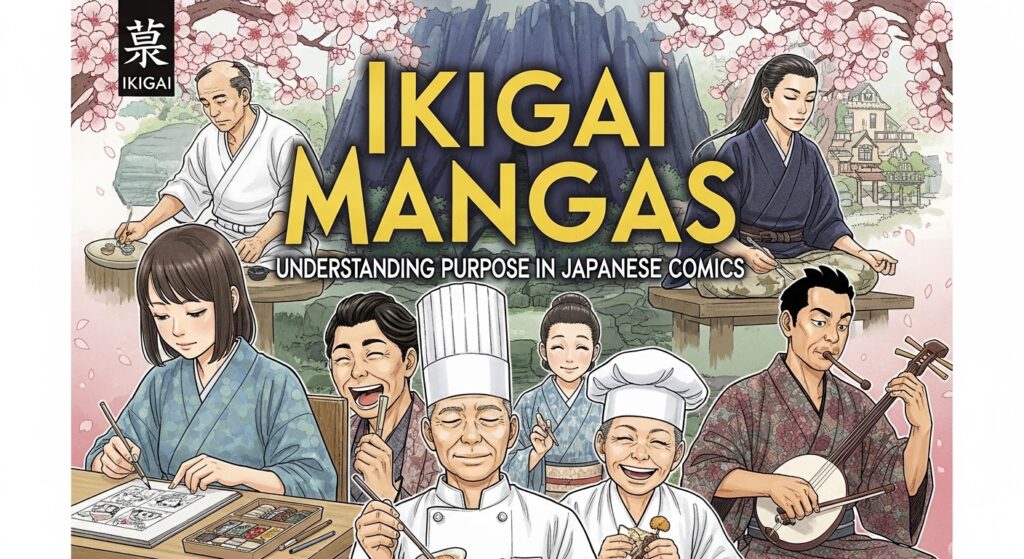
- Chefs, potters, mangaka, and musicians refine craft as a mirror of self.
- Failure is reframed: edits, broken pots, and burned dishes feed better iterations.
- Audience feedback, mentors, and apprentices create a feedback loop of meaning.
Workplace and Seinen Narratives
- Purpose is negotiated with reality—deadlines, budgets, and ethical constraints.
- Characters discover boundary‑setting: saying no to preserve their yes.
- Mentorship becomes a legacy project, transmitting know‑how and values.
How Ikigai Shows Up on the Page
Visual Motifs
- Repeated panels of hands at work emphasize craft.
- Seasonal changes (sakura, summer festivals, first snow) chart inner cycles.
- Negative space and quiet pages signal contemplation and choice.
Dialogue and Inner Monologue
- Characters name trade‑offs: safety vs. risk, talent vs. effort, self vs. team.
- Short, honest lines (“I’ll try again tomorrow”) mark turning points more than speeches.
- Humor softens the weight of purpose, keeping stories humane and warm.
Reading With Purpose: A Practical Guide
Before You Read
- Set an intention: Are you reading to relax, to learn a craft mindset, or to reflect on your own path?
- Pick a genre that meets your current energy. High‑stakes shōnen for momentum; slice‑of‑life for calm.
While You Read
- Track micro‑decisions: Where does a character choose patience over perfection?
- Notice mentors and peers: Who expands the protagonist’s world, and how?
- Watch the environment: Kitchens, clubs, and classrooms often act like characters themselves.
After You Read
- Journal one scene that moved you and why.
- Translate a lesson into action: a tiny habit, a conversation, a skill to practice.
- Share your reflection with a friend to make meaning social.
Building Your Own Ikigai From Manga Lessons
Map the Core Four (Gently)
- What you love: moments that give you energy.
- What you’re good at: skills others notice you do well.
- What the world needs: gaps you care about in your circles.
- What you can be paid for: sustainable ways to keep showing up.
Treat the model as a compass, not a cage. In manga, characters iterate—so can you.
Design Tiny Quests
- 20‑minute practice blocks to explore a craft.
- Weekly “mentor minutes” to learn from someone ahead.
- Monthly “chapter breaks” to rest and re‑orient.
Build a Supporting Cast
- A peer to practice with.
- A mentor to challenge your ceiling.
- A friend who keeps it fun when stakes feel heavy.
Ikigai Mangas and Cultural Context
Ikigai emerges from Japanese everyday life—attention to seasons, hospitality (omotenashi), and craft discipline (shokunin spirit). Manga channels these values into accessible narratives where growth is incremental and shared. Rather than a lone‑genius myth, many series highlight communal prosperity: a café thriving, a team winning with integrity, or a neighborhood revitalized.
Nuance and Misconceptions
- Ikigai isn’t only career success; retirees, students, and caregivers embody it too.
- Purpose can be plural: family today, craft tomorrow, community on weekends.
- Burnout is a signal to rebalance, not proof you lack purpose.
Finding Ikigai‑Themed Mangas
- Look for tags like slice‑of‑life, workplace, cooking, music, or sports.
- Read author notes and omake; creators often state their intent or influences.
- Explore award lists and small‑press gems—ikigai themes often live in quieter titles.
Reading Tips for Parents and Educators
- Pair reading with small projects (cooking a simple dish, drawing a panel).
- Discuss choices, not just outcomes: What value guided that decision?
- Use characters’ setbacks to normalize learning curves.
Accessibility and Formats
- Digital platforms offer adjustable fonts, panel zoom, and night modes.
- Print gives tactile rhythm; flipping pages can slow you down to savor art.
- Audiovisual companions (soundtracks, creator interviews) deepen immersion.
FAQ’s
What makes an “ikigai manga” different from a typical motivational story?
Ikigai mangas embed purpose in daily actions rather than grand speeches. Progress feels lived‑in: chores, practice, and conversations drive change.
Do I need to understand Japanese culture to appreciate ikigai themes?
No, but a little context—seasonal festivals, school clubs, craft traditions—enriches the read.
Can ikigai mangas help with career choices?
They can inspire experiments and reflections. Use them to model small tests, feedback loops, and values‑based decisions.
The Takeaway
Ikigai mangas invite us to treat life like a patient serialization. Each chapter is a chance to refine skills, strengthen relationships, and serve something beyond ourselves. Read slowly, notice the small wins, and let those pages nudge your own next tiny step.